 Oct 17 2026
 Oct 10 2026
 Oct 03 2026
 Sep 26 2026
 Sep 19 2026
 Sep 12 2026
 Sep 05 2026
 Aug 29 2026
 Aug 22 2026
 Aug 15 2026
 Aug 08 2026
 Aug 01 2026
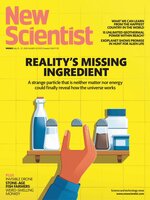 Jul 25 2026
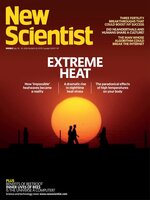 Jul 18 2026
 Jul 11 2026
 Jul 04 2026
 Jun 27 2026
 Jun 20 2026
 Jun 13 2026
 Jun 06 2026
 May 30 2026
 May 23 2026
 May 16 2026
 May 09 2026
New Scientist covers the latest developments in science and technology that will impact your world. New Scientist employs and commissions the best writers in their fields from all over the world. Our editorial team provide cutting-edge news, award-winning features and reports, written in concise and clear language that puts discoveries and advances in the context of everyday life today and in the future.
Open problems • Software that is free to use creates many opportunities – not all of which are good
New Scientist
Complex sugars found in interstellar space
The right atmosphere for life? • The discovery of an atmosphere around a rocky exoplanet in a star’s habitable zone is the most promising lead yet in our hunt for alien life, reports Leah Crane
Feeling stayed in paralysed hands after brain stimulation ended
Is consciousness quantum? • Has a mathematical analysis finally put a three-decade-long debate about the quantum nature of consciousness to bed, asks Karmela Padavic-Callaghan
Drug combating zombie cells may improve ageing
Stone Age fish farm found in Norway
Antivirals could help treat multiple sclerosis
Nicotine pouches linked to gum irritation
Military tech gets more accessible • A flight-control system used in hobby drones has been installed in Ukraine’s latest cruise missile, highlighting how consumer tech is helping to reduce weapons costs, reports David Hambling
Stealth drone spins so fast it disappears
Loss of low clouds may heat Earth • The expansion of cloudy skies since 1979 has slowed global warming – but this trend is expected to reverse, discovers Alec Luhn
The US-China AI arms race has entered a surprising era • Why has alarm over powerful artificial intelligence models built by Chinese companies waned, asks Matthew Sparkes
Game slashes dementia risk in men • Cognitive training seems to help men’s brains clear plaque-causing protein
Sea worm uses ‘bio-metal’ jaws to crush its prey
Ancient Egyptian princesses wielded weapons
Monkey with strong BO is new to science
Children with terminal brain cancer saved by cell therapy
Supplement could remove microplastic from the body
Maya astronomer’s name decoded • Hieroglyphs on the wall of a Maya building record calculations concerning planetary orbits
Queen’s powerful smell controls naked mole rat colonies
Sneaky maths • A trick to solving problems without answering them brought mathematicians to blows 100 years ago, but it’s now a common part of maths, discovers Jacob Aron
Virtual particles • The quarks that make up a human body are stuck together by weird glue-like particles – but they aren’t real, explains Chanda Prescod-Weinstein
Watery fate
Three more great books on the sun’s role in our lives
Let the sunshine in • While recent heatwaves made us stick to the shade, an intriguing book reveals sunlight’s health-giving effects – in moderation, finds David Robson
New Scientist recommends
Extra value • Two great reads this week: Sublimation, a taut thriller set in a world where crossing an international border splits you into two identical copies, and Moss’d in Space, a super cosy yet funny sci-fi novel. Emily H. Wilson enjoyed both
Your letters
Reality’s missing piece • Hints that a strange third type of particle exists are raising hopes that it could explain reality at its deepest level, discovers Miriam Frankel
DEEP HEAT • We may finally have a way to tap geothermal’s vast clean energy almost anywhere in the world, finds Katharine Sanderson
How geothermal is breaking new ground • Enhanced geothermal makes its own underground cracks, closed-loop systems act like buried radiators and superhot...